


September 23, 2025
Why ACST Outperforms Conventional Solar Power
Higher effective energy yield and stronger economics
ACST’s architecture targets usable energy rather than headline generation. By concentrating sunlight and converting it into storable thermal energy with an end‑to‑end efficiency around 81%, the system produces far more dispatchable energy per installed unit than typical PV arrays. That higher yield reduces levelized cost of energy (LCOE) in practice because:
- More of the captured solar resource is deliverable when needed (not just when the sun shines).
- Thermal storage avoids deep cycling losses and degradation common to long‑duration batteries, preserving asset value and reducing replacement costs.
- Multiple revenue streams (electricity, heat, cooling, water, hydrogen, fuels) shorten payback and improve return on invested capital.
A developer or asset owner comparing ACST to PV+battery should model delivered MWh to customers rather than raw nameplate capacity—ACST converts a larger share of incoming insolation into monetizable energy.
Exceptional land‑use efficiency and siting flexibility
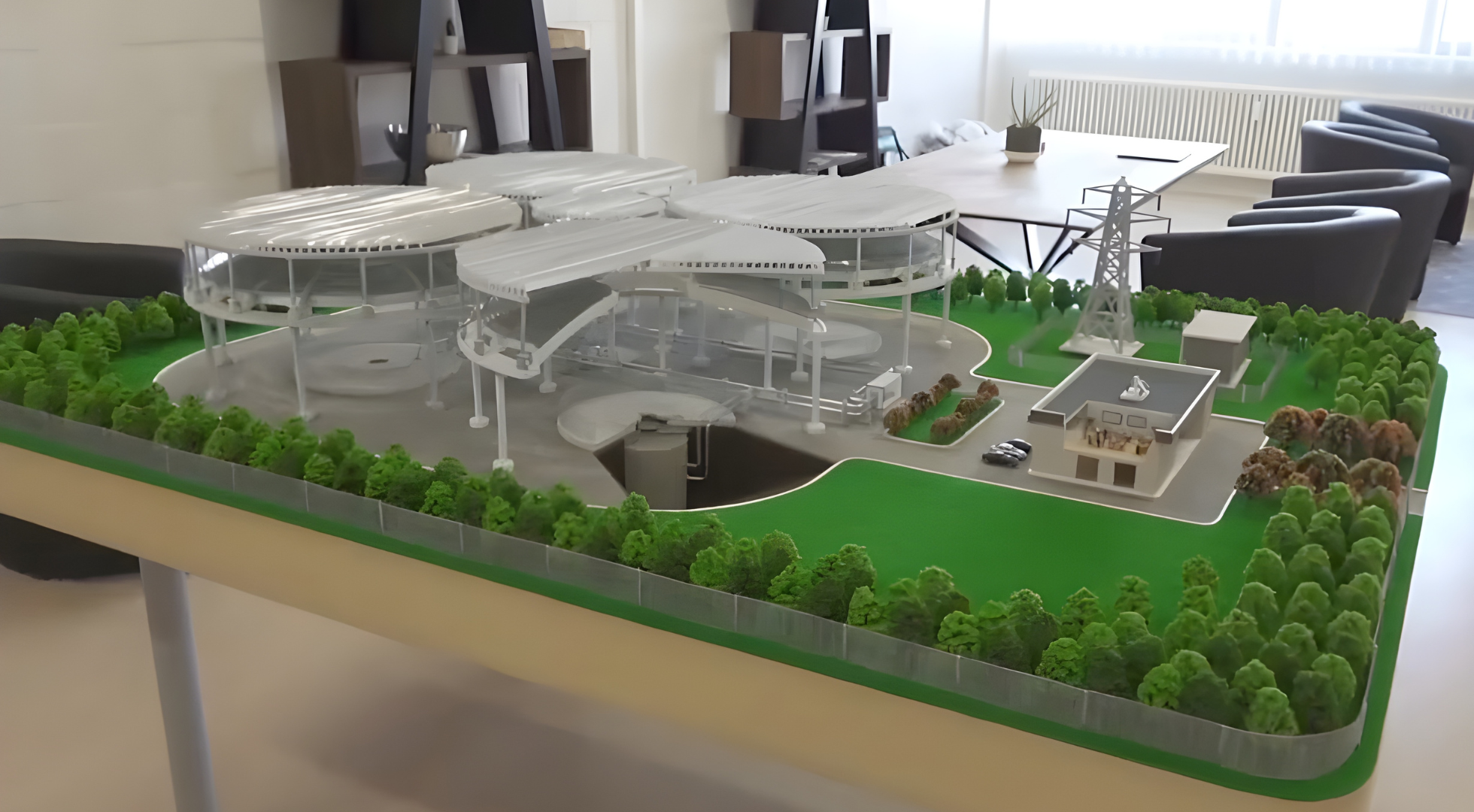
ACST’s concentration approach compresses generation and storage into a compact footprint. Practically, one hectare of ACST capture area yields usable energy equivalent to roughly five hectares of PV once storage and dispatchability are considered. This brings three concrete advantages:
- Easier permitting and less community resistance because of a smaller visible footprint.
- Proximity to thermal and electrical loads—reducing transmission losses and distribution upgrade costs.
- Feasibility in constrained sites: industrial parks, urban edges, islands, coastal plants, and brownfield redevelopment.
For projects where land cost, availability, or environmental impact is a binding constraint, ACST materially changes project feasibility.
Long‑duration thermal storage that enables seasonal shifting
ACST’s patented thermal storage stores heat with very low loss for months, enabling seasonal energy shifting: capture surplus summer insolation, deploy it in autumn and winter. Key operational and financial implications:
- Reduces or eliminates need for fossil peaker plants and long fuel supply chains.
- Lowers capacity payments and grid balancing costs by providing predictable dispatch windows.
- Minimizes operational risk from battery degradation cycles—thermal media retain capacity without frequent replacement.
Performance figures—up to ~90% of stored energy recoverable after six months—mean planning and procurement can rely on long‑term, predictable thermal reserves rather than variable short‑term storage.
Fast charge/discharge, high volumetric energy density
ACST storage media can reach volumetric densities up to ~400 kWh/m³ with effective surface areas up to ~96 m²/m³ (depending on medium). That combination delivers:
- Rapid soak-up of concentrated heat during peak insolation.
- Fast ramp to meet demand peaks or provide grid services (frequency, spinning reserve) through quick thermal-to-electric conversion.
- Compact storage volumes relative to seasonal heat requirements, reducing civil and containment costs.
For industrial users, that means a small footprint can supply sustained high-temperature process heat or continuous power for 24/7 operations.
True multifunctionality across sectors
Unlike single-output PV systems, ACST’s thermal vector is valuable across multiple markets. Practical applications include:
- Dispatchable electricity via steam or advanced thermal cycles (CHP).
- District heating and district cooling (via absorption chillers).
- Thermal desalination and water treatment.
- High‑temperature industrial processes (cement, chemical feedstock, materials processing).
- Hydrogen production (thermochemical or electrolytic routes powered by dispatchable electricity).
- Continuous IT/computing loads (data centers, crypto mining) with lower carbon intensity.
This multi‑service capability lets developers stack revenues, contract different offtakers, and optimize dispatch for the highest marginal value—strengthening project bankability and resilience to single‑market shocks.
Modular, scalable, and constructible with lower complexity
ACST is composed of repeatable concentrator modules and standardized storage units. That modularity yields:
- Faster project timelines through factory‑prefabricated components and simplified on‑site assembly.
- Easier O&M with standardized parts and maintenance procedures.
- Staged scaling: start with a few modules for pilot capacity, expand incrementally as demand or financing grows.
Material selection favors common, cost‑effective components (mirrors, steel structures, insulation, storage media), reducing supply chain risk and capital intensity relative to custom large heat plants or complex PV+battery stacks.
Lower lifecycle costs and reduced material replacement risk
Thermal storage avoids several cost drivers of electrochemical storage:
- No frequent cell replacement or complex recycling streams.
- Lower sensitivity to ambient temperature swings and depth‑of‑discharge stress.
- Reduced ancillary equipment (no high‑power DC conversions between battery banks and AC grid where thermal-to-electric cycles can be optimized for local needs).
Over a multi‑decade project horizon, these factors can meaningfully reduce total cost of ownership and maintenance overhead.
Grid and market integration advantages
ACST can provide multiple grid services beyond energy delivery:
- Firm capacity and peak shaving to reduce demand charges.
- Ancillary services (ramping, inertia emulation via thermal generators, reserve capacity).
- Local grid deferral by colocating with demand centers and reducing upstream reinforcement needs.
Because ACST supplies both heat and power, it can be contracted under diversified commercial arrangements: PPAs for electricity, heat supply contracts for district networks, desalinated-water offtake agreements, or industrial energy service agreements—dispersing counterparty risk.
Environmental and ESG benefits
By replacing fossil-fired boilers, diesel gensets, and gas peakers across power, heat, and industrial sectors, ACST delivers measurable emissions reductions and local air‑quality improvements. Its multifunctionality also reduces infrastructure duplication, land conversion, and embodied carbon associated with building separate systems for electricity, heat, and water.
Implementation considerations and risk mitigation
To realize these advantages, projects should follow disciplined planning and de‑risking steps:
- Technical validation: pilot demonstration to confirm storage retention, thermal cycling durability, and integrated controls.
- Site assessment: solar resource, land constraints, proximity to heat/power loads, water access for desalination.
- Commercial structuring: multi‑stream revenue models, blended offtake contracts, and tailored financing to reflect diversified returns.
- Regulatory engagement: secure recognition of thermal services in market rules and incentives for long‑duration storage.
- O&M and procurement strategy: standardized spare parts, remote monitoring, and preventive maintenance plans.
Properly executed, these steps minimize technology and market risk and accelerate commercial scale‑up.
Ready to implement ACST at your site?
Turn your energy costs into a strategic, sustainable asset. We design, finance, and deploy ACST systems tailored to commercial, industrial, municipal, and island applications—delivering dispatchable power, low‑carbon heat, cooling, desalination, and fuel‑grade process energy from a single compact installation.
Contact us to start with a free site assessment and feasibility study. We'll evaluate your energy profile, identify high‑value applications (electricity, district heat, cooling, desalination, e‑fuel feedstock), and present a custom implementation roadmap with CAPEX/OPEX estimates, expected payback, and financing options.
Email: contact@aelios.solar
Consultation at: https://aelios.solar/contact
We’ll respond within two business days and provide a clear next step: a no‑obligation feasibility brief showing projected energy yields, storage capacity, and ROI for your facility.