


September 23, 2025
The ACST Advantage
Concentration instead of capture
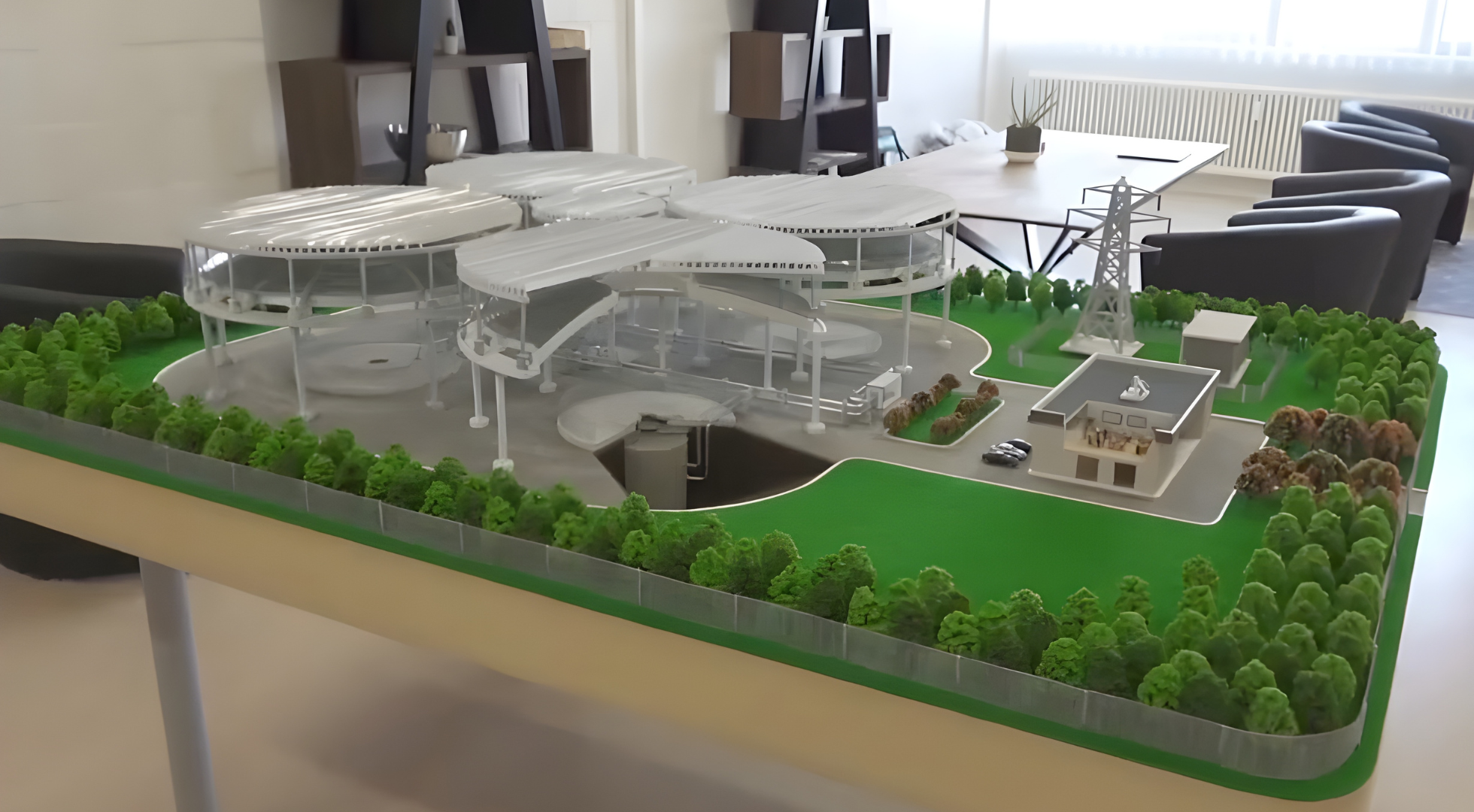
ACST changes the fundamental step of solar conversion. Rather than using widespread photovoltaic panels to capture sunlight and convert it directly to electricity, ACST concentrates the sun’s rays with four precision concentrators that focus light onto a single high‑temperature focal point. Each concentrator carries movable mirrors whose positions are governed by a computer control system that continuously tracks the sun. This active alignment concentrates incoming solar energy into a dedicated heat‑input stream directed into a thermal storage tank. The result: very high conversion efficiency—about 81.2% system efficiency—so an ACST installation delivers substantial output from a compact footprint of roughly one hectare.
High-density, fast‑responding thermal storage
The concentrated solar input heats a purpose‑chosen storage medium inside the tank to the required operating temperature. The storage medium is selected for energy density and surface characteristics, enabling storage capacities up to 400 kWh per cubic meter. Because the thermal mass is engineered with a very large effective surface area (up to roughly 96 m² per m³ depending on the medium), incoming heat is absorbed rapidly and can be released just as quickly when demand requires. This combination of high volumetric energy density and quick charge/discharge response lets ACST serve both immediate peak needs and planned, long-duration supply.
Long‑duration retention and seasonal shifting
ACST’s patented storage design minimizes thermal losses, allowing energy to be kept for months with negligible degradation. In practical terms, as much as 90% of stored energy remains available even after six months of idle storage. That capability is transformative: it enables seasonal shifting of solar output—capturing surplus summer sunlight and deploying it in winter or during extended cloudy periods—bridging the gap that short‑duration battery systems cannot economically fill.
Multifunctional thermal output for multiple sectors
Because ACST stores energy as heat rather than electrical charge, its output is inherently versatile. Thermal energy can be converted to electricity through mature thermal power cycles, fed directly into district heating networks, used to drive absorption chillers for large‑scale cooling, or applied to desalination and industrial process heat. High‑temperature outputs also enable advanced use cases such as e‑fuel synthesis and chemical processing. A single ACST installation can therefore replace or complement multiple dedicated assets—power plants, heat plants, chillers, and desalination units—reducing duplicated infrastructure and increasing overall site value.
Compactness and flexible siting unlock deployment options
Concentration reduces spatial requirements compared with equivalent photovoltaic fields. ACST’s smaller footprint makes it feasible to site systems on urban fringes, industrial parks, coastal facilities, and island microgrids where large solar farms would be impractical. Lower land use simplifies permitting, reduces local opposition, and enables closer proximity to heat and power loads—minimizing transmission losses and network upgrade costs.
Operational reliability and economic outlook
ACST’s design targets stable, dispatchable delivery rather than intermittent supply. The combination of predictable thermal storage, rapid dispatch capability, and multi‑revenue streams (electricity, heat, cooling, water, fuels) improves project bankability. By providing consistent service, ACST lowers offtaker risk and can achieve more attractive financing terms than generation-only projects. For industrial operators and municipalities, replacing fossil-fired boilers and diesel generators with a long‑duration, low‑carbon thermal platform can deliver both cost savings and compliance with decarbonization commitments.
Implementation considerations and scale‑up challenges
Realizing ACST’s potential requires demonstration at scale and careful integration into local energy systems. Key practical steps include: validating long‑term storage stability and thermal cycling durability; scaling production of concentrators, mirrors, and storage modules; integrating controls with grid and heat networks; and aligning market incentives to value long‑duration storage and thermal services. Regulatory recognition of thermal energy value and revised market mechanisms for multi‑product energy sales will accelerate uptake.
Systems thinking: ACST as an energy hub
Viewed holistically, ACST enables integrated energy hubs rather than single‑purpose plants. A concentrated thermal installation can serve as the nucleus of an industrial park, district heating scheme, desalination complex, or e‑fuel production campus—supplying electricity, heat, cooling, freshwater, and process energy from one low‑emissions source. That systems‑level approach reduces infrastructure redundancy, simplifies logistics, and amplifies decarbonization impact.
Conclusion: sunlight stored, on demand
ACST reframes solar energy from a weather‑dependent generation stream into a storable, dispatchable, and highly useful energy form. Its high efficiency, high-density thermal storage, and multifunctional output address the core technical and economic obstacles that have limited renewable energy’s ability to fully replace fossil fuels and nuclear. With successful scaling and supportive policy, ACST could become a foundational technology for resilient, low‑carbon energy systems.
Ready to implement ACST at your site?
Turn your energy costs into a strategic, sustainable asset. We design, finance, and deploy ACST systems tailored to commercial, industrial, municipal, and island applications—delivering dispatchable power, low‑carbon heat, cooling, desalination, and fuel‑grade process energy from a single compact installation.
Contact us to start with a free site assessment and feasibility study. We'll evaluate your energy profile, identify high‑value applications (electricity, district heat, cooling, desalination, e‑fuel feedstock), and present a custom implementation roadmap with CAPEX/OPEX estimates, expected payback, and financing options.
Email: contact@aelios.solar
Consultation at: https://aelios.solar/contact
We’ll respond within two business days and provide a clear next step: a no‑obligation feasibility brief showing projected energy yields, storage capacity, and ROI for your facility.